

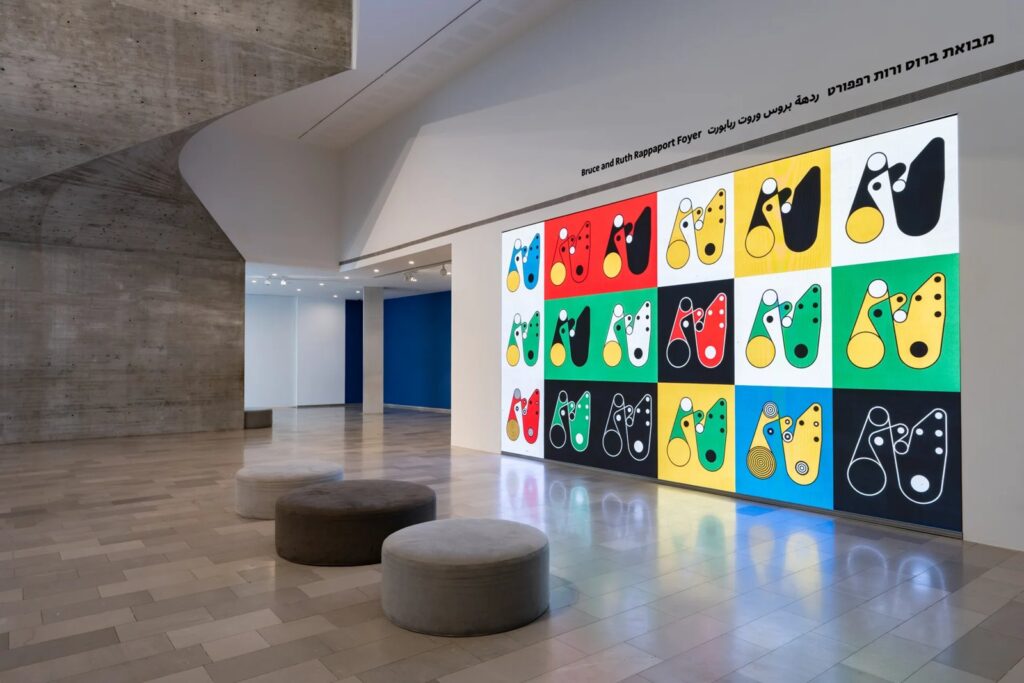
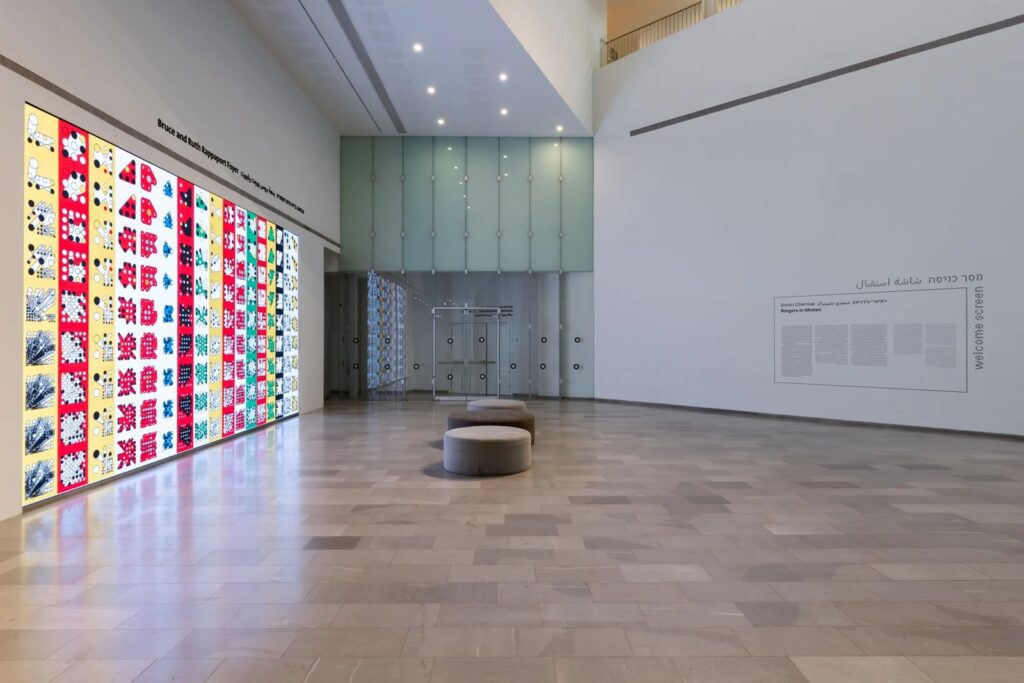
Dmitri Cherniak’s Ringers is on a museum wall in a type collectors have by no means seen earlier than. Dmitri Cherniak: Ringers in Movement, a dwell software program work made for the Tel Aviv Museum of Artwork, runs within the museum’s Bruce and Ruth Rappaport Lobby till Saturday, November 14, 2026. Nothing on the display screen is a recording. In keeping with the artist’s undertaking web page, 55 scenes are drawn in code as they play, for greater than an hour with out repeating. In the event you can’t get to Tel Aviv within the subsequent two weeks, the identical work runs in your browser on Cherniak’s dwell Ringers in Movement web site.
That makes this a great second to look once more at one among generative artwork’s best-known collections. This entry in our Behind the Bluechips information to legacy NFT artists covers what Ringers is, how Cherniak has tried to indicate a system slightly than a single image, and what the Tel Aviv fee says about how museums are beginning to deal with code-based artwork.
What Ringers is
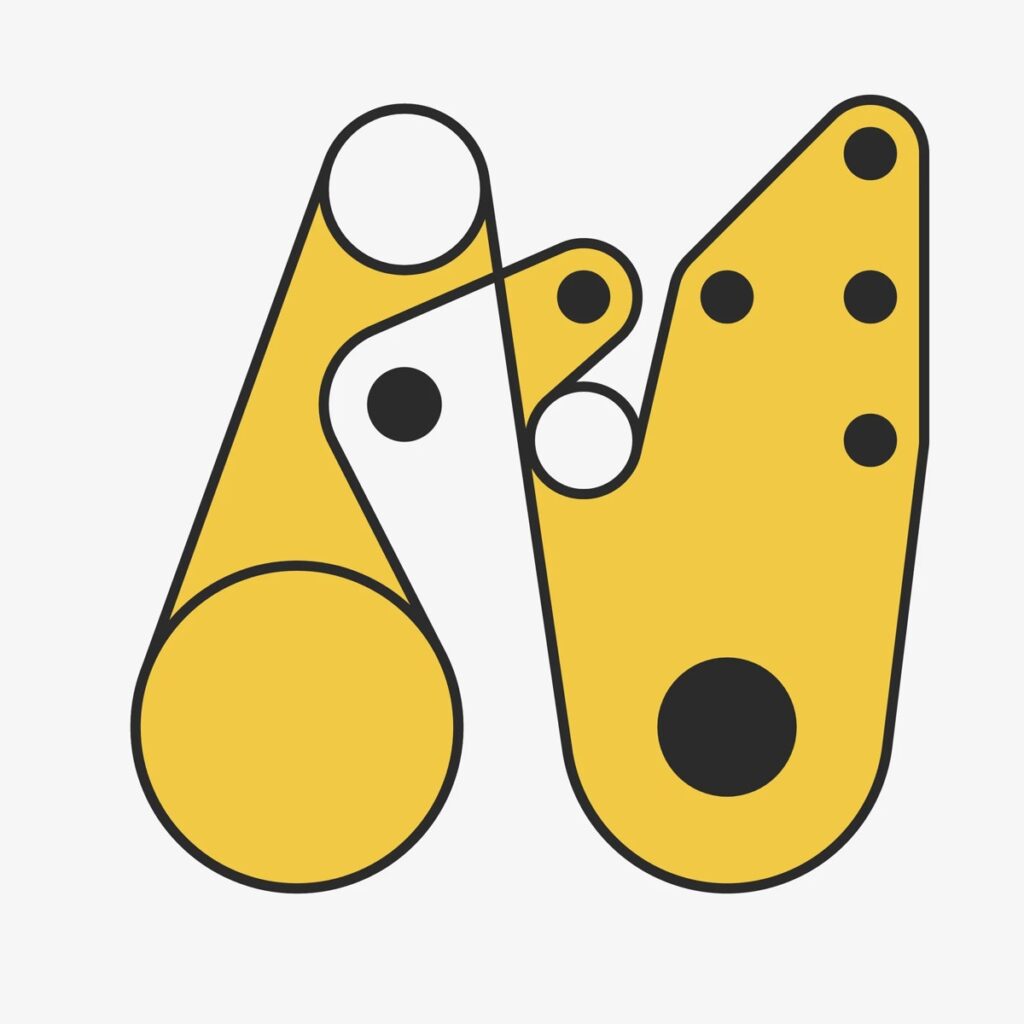
Ringers begins with one query, within the phrases of Cherniak’s personal Ringers web page: “what number of methods can a string wrap round a set of pegs?” The gathering was launched on Artwork Blocks Curated on January 31, 2021, and has 1,000 distinctive works. Every one was generated in the intervening time of minting from a novel transaction hash, utilizing JavaScript within the browser. Peg rely, scale, association, wrapping course and coloration all change from piece to piece, so dense grids and spare outlines come out of the identical algorithm.
Neither the artist nor the collector selected any ultimate picture upfront. That’s the core of long-form generative artwork on Artwork Blocks, and it’s why Ringers remains to be a reference level 5 years later. Cherniak designed the principles and their limits. The outputs present what these guidelines enable.
Essentially the most well-known instance is Ringers #879, referred to as The Goose. Cherniak’s web site says it received its identify as a result of viewers acknowledged a hen in its pegs, curves and yellow fields, although it got here from the identical guidelines as the opposite 999 works. It’s a neat lesson in how generative artwork works: a fastidiously written system can nonetheless shock the one that wrote it.
From one picture to a grid
Cherniak has spent years on a sensible drawback: how do you exhibit a set whose actual topic is the area of attainable photographs? In his essay for the Tel Aviv present, he writes that when curators requested how Ringers needs to be proven, his reply was all the time the identical: “as prints organized in a fastidiously curated grid.” One output is a composition; a grid begins to disclose the system.
You may hint that concept by means of his latest reveals. In 2023, Ringers #962: The LACMA Iterations, made with Avant Arte in assist of the Los Angeles County Museum of Artwork, positioned Ringers #962 on the heart of a three-by-three grid. Every variation round it adjustments the proportion of pegs the string wraps, whereas preserving the yellow peg. Cherniak describes #962 within the essay because the work coming into LACMA’s assortment, and the undertaking web page reveals an illustrated card that breaks the algorithm into six steps: generate, pattern, heart, type, join and coloration. In 2025, the Toledo Museum of Artwork’s Infinite Photographs exhibition hung 25 Ringers as a five-by-five grid that grew extra advanced from left to proper and prime to backside.
What adjustments when the grid strikes
The Tel Aviv fee got here from a distinct course. Within the essay, Cherniak notes that many museums had put in massive LED screens and have been in search of motion-based works to fill them. Curator Tal Lanir, who he says was constructing a severe new-media program on the museum, wished the LACMA print’s thought in movement. Cherniak didn’t wish to animate one Ringer or make an ornamental loop. He constructed what he calls “one thing nearer to a harness for generative artwork,” a system that levels the algorithm’s parameters and transitions in actual time.
The Tel Aviv Museum of Artwork’s exhibition web page describes the consequence as a dialogue between artist and machine, constructed from the variety of circles, the traces round them, and eight colours. In its phrases, the work produces “a succession of photographs and combos that can virtually by no means repeat themselves.” Cherniak’s abstract is shorter: “The LACMA print presents small multiples spatially. Ringers in Movement presents them temporally.”
The essay additionally explains some decisions you received’t see from a single body. The title echoes László Moholy-Nagy’s 1947 guide Imaginative and prescient in Movement. The sound, the place every wrap of the string rings like a bell, is constructed from the notes of Hatikvah, slowed and damaged up till it sounds nearer to bells than to a melody. Cherniak connects the wrapping line to the eruv and to tzitzit and tefillin, types that, as he places it, use “boundaries to create belonging.” And since the system generates photographs no person has checked upfront, he writes that it wanted express safeguards towards producing a swastika. That may be a reminder that exhibiting a dwell algorithm in public is a curatorial accountability in addition to a technical one.
The movement model didn’t seem out of nowhere. Cherniak’s web site lists an early take a look at of Ringers in Movement in AOTM’s presentation on the inaugural Zero 10 sector of Artwork Basel Miami Seashore in December 2025, the identical truthful part we checked out in Artwork Basel Zero 10: When Digital Artwork Will get Truthful Infrastructure.
Why Ringers in Movement issues in 2026
The museum’s exhibition textual content asks the questions instantly: the place does human art-making finish and computation start, and the way a lot management does the artist give as much as a system working inside his limits? For NFT collectors, there’s a extra sensible query beneath. A token holds one output. Ringers in Movement reveals {that a} museum can current the entire system as a substitute, as dwell software program that’s by no means fairly the identical twice.
This matches a wider sample this yr. Establishments are constructing methods to indicate and assist code-based work, from the Pompidou’s new Digital Artwork Committee for onchain and generative artwork to group gatherings like Artwork Blocks Marfa Weekend 2026. Ringers in Movement is without doubt one of the clearest examples of an artist answering the show drawback himself, as a substitute of handing a museum a video file.
How you can see Dmitri Cherniak’s Ringers in Movement
The place: Bruce and Ruth Rappaport Lobby, Herta and Paul Amir Constructing, Tel Aviv Museum of Artwork, 27 Shaul HaMelech Blvd., Tel Aviv.When: by means of Saturday, November 14, 2026. The museum is closed Sundays. Its go to web page lists hours of 10:00 to 18:00 on Monday, Wednesday and Saturday, 10:00 to 21:00 on Tuesday and Thursday, and 10:00 to 14:00 on Friday, with final entry one hour earlier than closing. It additionally notes that on November 4 and 5 the museum closes at 18:00, with final admission at 16:00. Test the web page earlier than you go.Tickets: common museum admission is NIS 55, based on the go to web page, with listed reductions that require a legitimate card or certificates.From wherever: open the dwell paintings in a browser. The undertaking web page says the grid adapts to any display screen, from the museum wall to a cellphone, and sound begins with a faucet.Curator and assist: curated by Tal Lanir; the museum credit assist from Alan and Caroline Howard.
For extra of the artists and collections that formed NFT tradition, browse the Behind the Bluechips sequence.


