

After the Blur shutdown, there isn’t a single substitute, and that’s the helpful information. The blur.io web site closed on November 12, 2026. Blur says its market protocol retains working onchain, that pre-existing bids and listings made on the location had been canceled, and {that a} withdrawal web page for Blur Pool ETH and Mix loans stays on-line till November 12, 2027. The place you go subsequent is dependent upon what you gather. For 1/1 artwork, SuperRare pays artists a hard and fast 10% royalty on resales. For generative artwork, Artwork Blocks runs its personal secondary marketplace for its initiatives. For PFPs and normal Ethereum accumulating, OpenSea fees a 1% promoting charge and lets creators make royalties required or non-compulsory. For Tezos artwork, objkt takes a 5% vendor charge and pays royalties on each sale. One former choice is gone for Ethereum: Magic Eden ended its EVM market on March 9, 2026 and now trades solely on Solana.
This information types the venues nonetheless open by the sort of collector each serves and by the way it treats creator royalties, utilizing every platform’s personal charge and royalty documentation as checked on November 13, 2026. It doesn’t rank anybody by buying and selling quantity, and it isn’t buying and selling recommendation.
First, shut out what remains to be on Blur
Your NFTs had been by no means saved on Blur. They sit in your pockets and will be listed anyplace that helps their chain. What should be tied to Blur is ETH. That features your Blur Pool steadiness, which funded bids, and any NFTs or ETH locked in Mix loans. The closed blur.io website now presents a pockets lookup for each, and its FAQ says the web page “will keep on-line till November 12, 2027.” It additionally notes that balances and loans reside on Ethereum, so that they gained’t disappear when the web page goes offline. Accumulating them will simply be “much less handy.” For each step, see our Blur shutdown guidelines for NFT collectors.
After Blur shutdown: choose a venue by what you gather
Blur was constructed for quick buying and selling throughout entire collections. Most collectors who’re searching for a brand new house need one thing narrower: a spot that exhibits the sort of work they gather and pays the artists behind it. Right here is how the primary venues nonetheless open evaluate, utilizing their very own documentation.
Sources: SuperRare Assist Middle, Artwork Blocks developer docs, OpenSea charges and creator earnings assist pages, objkt charge construction, and Magic Eden’s service modifications and costs pages, all checked November 13, 2026. Charges can change, so examine the venue’s personal web page earlier than you record.
If you happen to gather 1/1 artwork: SuperRare
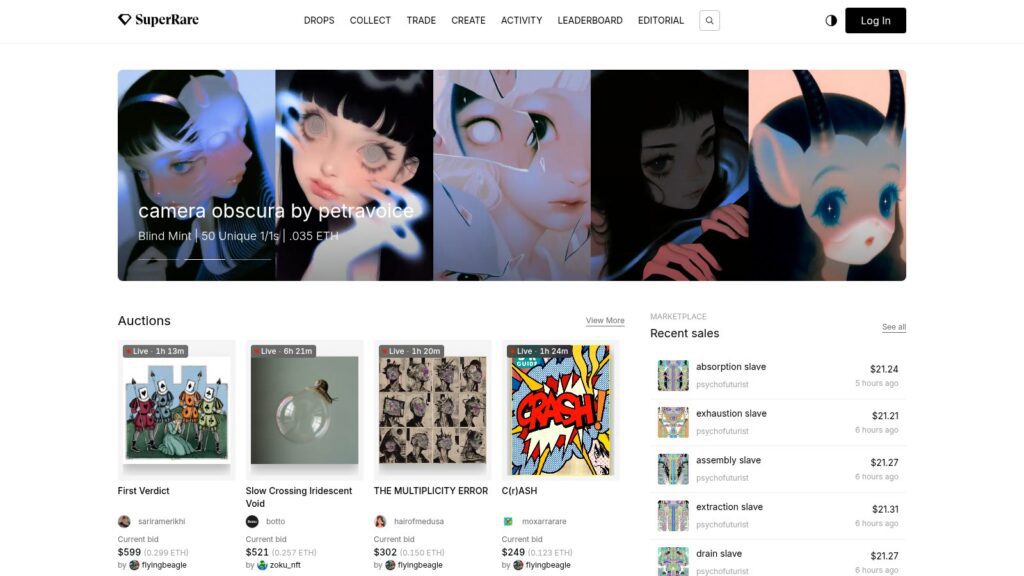
SuperRare is a curated market. Its assist heart says solely artists who’re invited to the platform can mint there. The phrases are the identical whether or not a piece sells at public sale, by provide, or at a set worth. On the primary sale, the artist retains 85% and the SuperRare DAO Neighborhood Treasury receives 15%. On each resale after that, the artist receives 10% as a royalty and the vendor retains 90%. Consumers additionally pay a 3% market charge on high of the value, which works to the DAO treasury.
Two particulars matter if you’re arriving from Blur. SuperRare says you’ll be able to’t at the moment promote an NFT there that you simply purchased elsewhere. It additionally advises house owners to not settle for presents on SuperRare tokens by OpenSea, as a result of that “runs the chance of bypassing the Artist royalty system.” It fits collectors who purchase single works and wish the resale royalty settled up entrance, not left to every vendor.
If you happen to gather generative artwork: Artwork Blocks
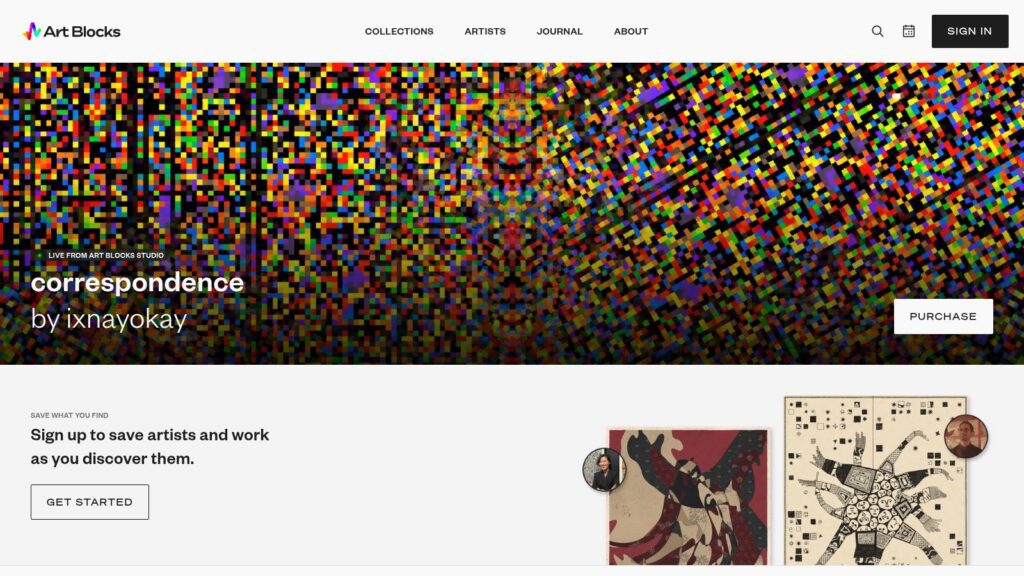
Artwork Blocks hosts long-form generative initiatives, the place the collector’s mint produces an output from the artist’s code. It additionally runs a secondary market for beforehand launched works from its personal collections. Its developer documentation units out the cash. For Artwork Blocks Studio initiatives, major gross sales go 90% to the artist and 10% to Artwork Blocks. Secondary royalties are “as much as 5% complete.” By default, two-thirds go to the artist and one-third to Artwork Blocks, paid by a splitter contract.
These royalties observe the ERC-2981 commonplace and the Royalty Registry, which Artwork Blocks says is supported by all main secondary marketplaces. Once we checked the homepage on November 13, it was that includes mints “reside from Artwork Blocks Studio” subsequent to works “reside from the Generative Artwork Museum.” It fits collectors who observe artists and algorithms greater than particular person tokens.
If you happen to gather PFPs or a little bit of the whole lot: OpenSea
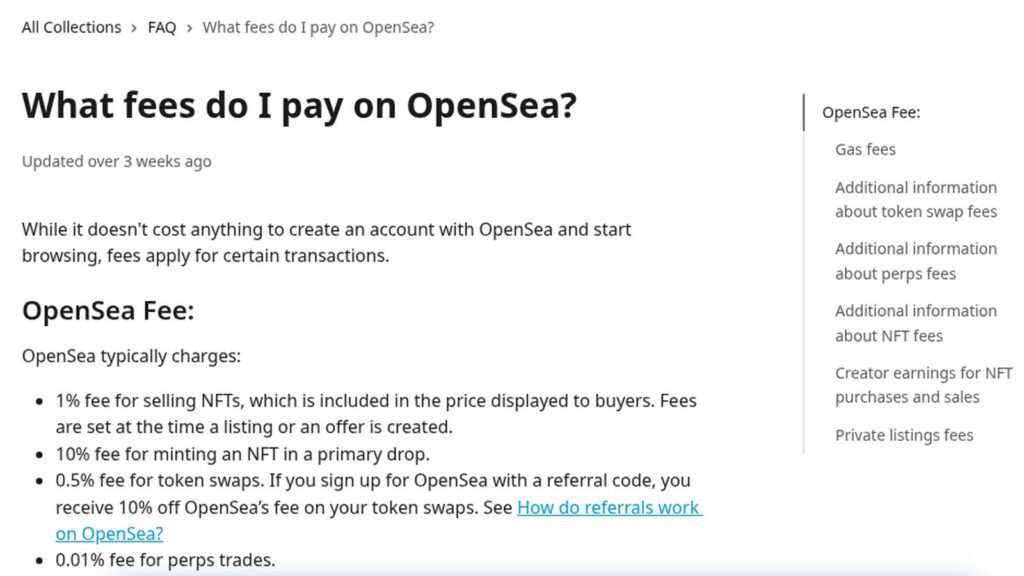
For profile-picture collections and combined wallets, OpenSea is the general-purpose choice nonetheless standing. It covers Ethereum, Solana and different chains, and likewise presents token swaps. Its assist heart lists a 1% charge for promoting NFTs, which is included within the worth consumers see, and a ten% charge for minting in a major drop. Personal listings reserved for one purchaser’s pockets carry no OpenSea charge.
Royalties rely upon the gathering. On OpenSea, creator earnings are both required or non-compulsory. Creators can require them if their contract helps the ERC721-C or ERC1155-C commonplace, or in the event that they deployed by OpenSea Studio after April 2, 2024. In any other case the creator suggests a price and the vendor chooses whether or not to pay it, with no minimal. If paying artists issues to you, examine the gathering’s setting earlier than you record, and depart creator earnings switched on when it’s non-compulsory.
If you happen to gather Tezos artwork: objkt
Blur by no means served Tezos, however loads of Ethereum collectors additionally maintain work on it. objkt’s charge web page is brief. It fees a 5% market charge on gross sales by its contracts, paid by the vendor, and royalties come out of each sale earlier than the vendor is paid. Its labored instance is a 100 XTZ sale with 20% royalties, the place the creators obtain 20 XTZ, objkt takes 5, and the vendor retains 75. Gross sales that run by third-party contracts equivalent to Teia carry no further objkt charge.
The place to not look: Magic Eden on Ethereum
Magic Eden not serves Ethereum collectors. Its assist heart says market help for EVM chains and Bitcoin ended on March 9, 2026, leaving the Solana Market and Packs. If you happen to gather on Solana, Magic Eden fees 2% on transactions and lets consumers select whether or not to honor royalties until the gathering enforces them. If you happen to as soon as listed Ethereum NFTs there, the approvals you granted keep on the blockchain till you revoke them.
Earlier than you record anyplace new
Clear up previous permissions. Each market you listed on in all probability nonetheless has approval to maneuver your NFTs. Our step-by-step information to revoking NFT approvals exhibits the best way to discover and cancel them.
Verify the royalty setting, not simply the charge. A decrease platform charge can imply the artist will get nothing on resale. The desk above exhibits which venues pay creators on each sale and which depart it to the vendor.
Preserve your personal data. Save contract addresses, token IDs and unique information. Blur is the most recent venue to shut, not the primary. See what occurs to your NFTs in a platform shutdown.
Belief solely official hyperlinks. Shutdowns entice pretend “migration” and “declare” pages. Blur’s personal announcement warned about impersonators.
Why the after-Blur selection is a tradition selection
Blur grew by treating NFTs as a buying and selling market and creator royalties as largely non-compulsory, and in 2023 OpenSea moved to non-compulsory creator charges for brand spanking new collections too. With the location closed, collectors can select once more what sort of market they wish to help. Venues that construct the artist’s lower into their very own phrases, like SuperRare and objkt, are making one wager. So are initiatives that set royalties within the contract, as Artwork Blocks does. Venues that depart it to every vendor are making one other. Both means, the selection is now made by collectors one itemizing at a time. Comply with the venues and the arguments in our NFT marketplaces protection.


